Kale Salad with Apple Cider Vinaigrette with Fresh Apple, Dried Fruit, Sunflower Seeds and Soft Cheese
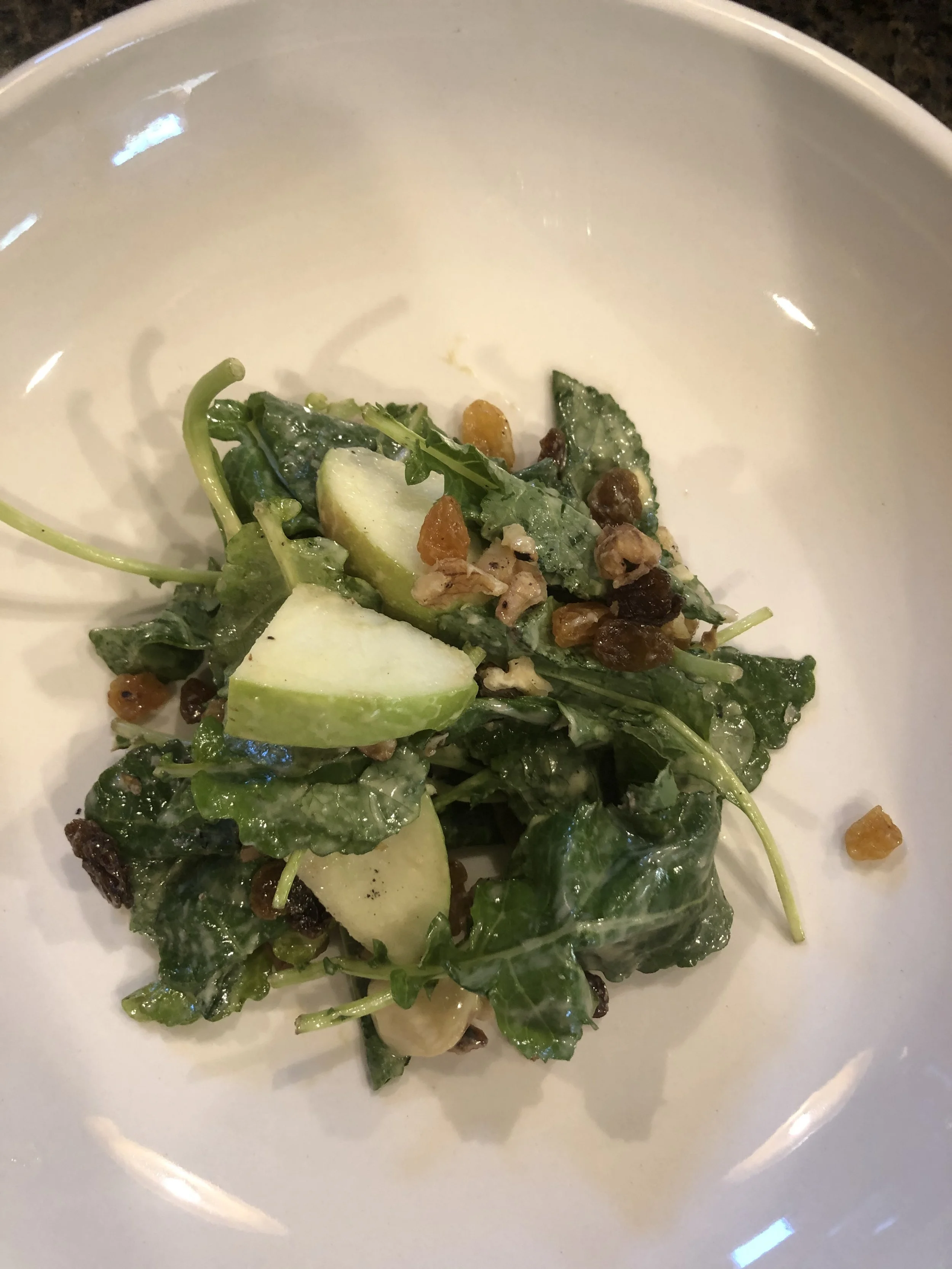
A satisfying salad is more than vegetables alone: combining greens + fruit + healthy fat + seeds or nuts + optional protein creates better flavor, texture, and nutritional balance. Technique matters with sturdy greens. Properly de-stemming, dressing, massaging, and resting kale transforms it from tough and bitter into tender and flavorful. Learning to make a simple vinaigrette is a versatile skill that reduces reliance on bottled dressings and allows control over salt, sweetness, and ingredients.
This recipe was tweaked from budgetbytes.com
QUANTITY AND INGREDIENTS
VINAIGRETTE DRESSING
1/3 cup olive oil
1/4 cup apple cider vinegar
2 clove garlic
1 1/2 Tbsp Dijon mustard
1/4 tsp salt
10-15 cranks freshly cracked pepper
SALAD FIXINGS
2 bunches of Dinosaur kale, de-stemmed, rinsed and dried, and chopped into large pieces
1 medium granny smith apple, sliced or large dice
1/4 cup raisins, dried cranberries, or blueberries
1/2 cup sunflower seeds, lightly salted (alternatively use toasted walnuts or other toasted nut)
soft cheese, goat or feta
SPECIAL EQUIPMENT
NINJA blender for dressing
PREPARE YOUR MIS EN PLACE
1. Read and reread the recipe. Divide tasks amongst team members.
2. Gather all the ingredients and necessary equipment.
PREPARING THE DRESSING
1. In a blender combine the apple cider vinegar, Dijon mustard, garlic, and salt. Blend well. Slowly add the oil and blend on high until the dressing is smooth. Add freshly cracked pepper.
PREPARING THE SALAD FIXINGS AND FINAL PREP
2. Combine the kale, apple, and raisins (or other dried fruit).
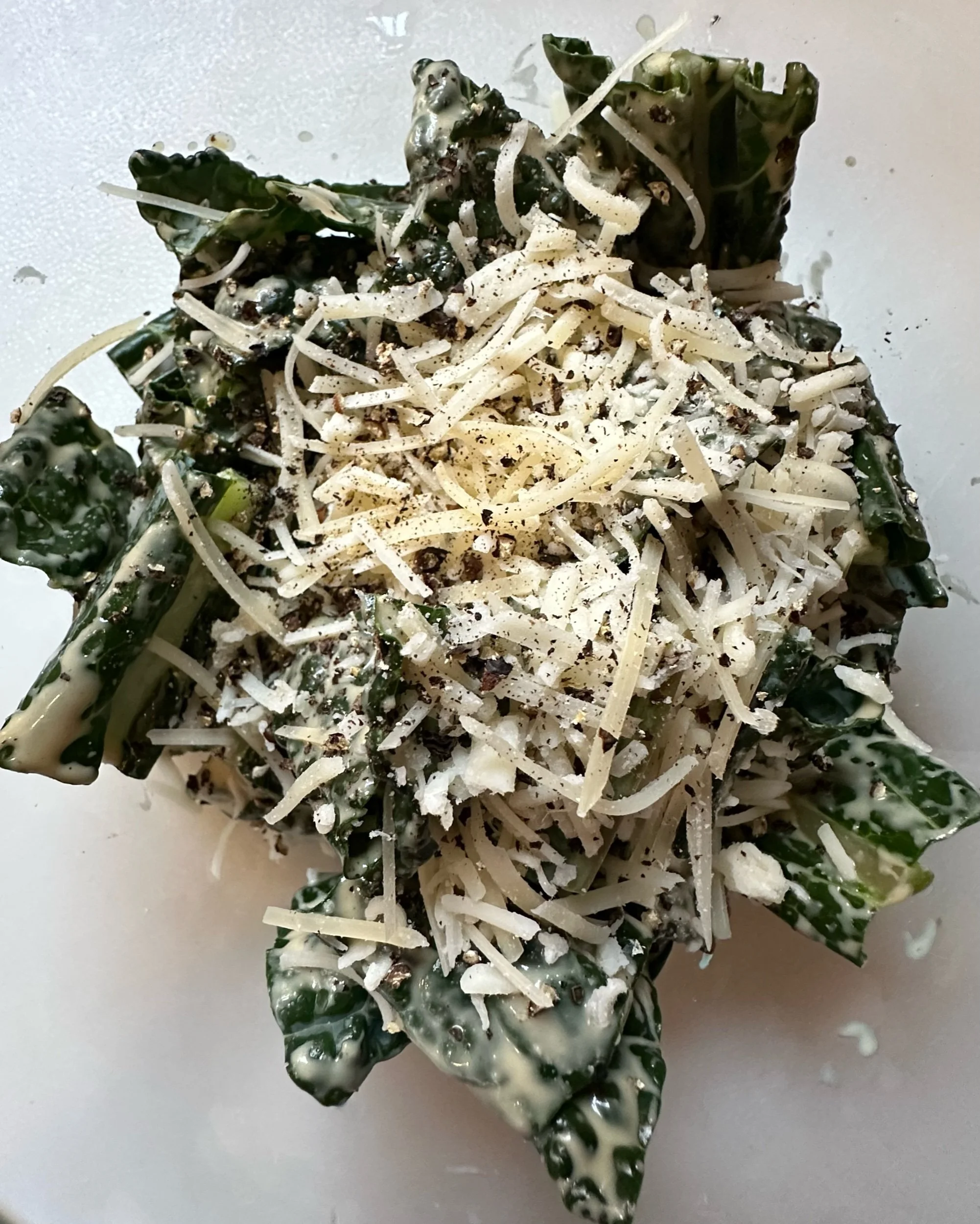
3. Fifteen minutes before serving, add enough dressing to coat, using your hands to mix. Let sit for 10-15 minutes. This cuts the bitterness of the kale. Add more dressing as desired. Top with the sunflower seeds. Add cheese for additional flavor and protein for a complete meal. Plate and serve.
NUTRITION HIGHLIGHTS
1. Dark leafy greens: Kale is rich in vitamins A, C, and K, as well as folate and antioxidant compounds.
2. Fiber-rich: Kale, apples, dried fruit, and sunflower seeds all contribute fiber, supporting digestive health and satiety.
3. Healthy fats: Olive oil and sunflower seeds provide primarily unsaturated fats.
4. Plant-based nutrients: Sunflower seeds add vitamin E, magnesium, protein, and healthy fats.
5. Fruit for natural sweetness: Granny Smith apple and dried fruit add flavor and sweetness without relying on a sugary dressing.
6. Optional protein and calcium: Goat cheese or feta adds protein, calcium, and flavor; the salad can also be served without cheese for a fully plant-based option.
TECHNIQUES
1. De-stemming kale: Removing the tough central stem improves texture and makes the salad easier to eat.
2. Drying greens thoroughly: Dry kale allows the vinaigrette to cling rather than becoming diluted.
3. Emulsifying a vinaigrette: Dijon mustard helps bind the vinegar and olive oil into a smooth, cohesive dressing.
4. Slowly adding oil: Gradually incorporating olive oil while blending creates a stable emulsion.
5. Using acid to tenderize greens: Apple cider vinegar helps soften kale and balance its natural bitterness.
6. Massaging and resting kale: Tossing the kale thoroughly with dressing and allowing it to sit for 10–15 minutes tenderizes the leaves and improves flavor.
7. Balancing flavors: Bitter kale, tart apple, sweet dried fruit, salty cheese, rich seeds, and acidic vinaigrette create a balanced dish.
SKILLS
1. De-stemming, washing, and drying leafy greens.
2. Chopping kale into evenly sized pieces.
3. Slicing or dicing apples safely and uniformly.
4. Making an emulsified vinaigrette from scratch.
5. Learning the basic acid-to-oil relationship in salad dressing.
6. Tasting and adjusting for acid, salt, pepper, and sweetness.
7. Using your hands to massage and evenly dress sturdy greens.
8. Adding ingredients in stages so seeds and cheese retain their texture.