Zucchini, Beet and Wheat Berry Salad
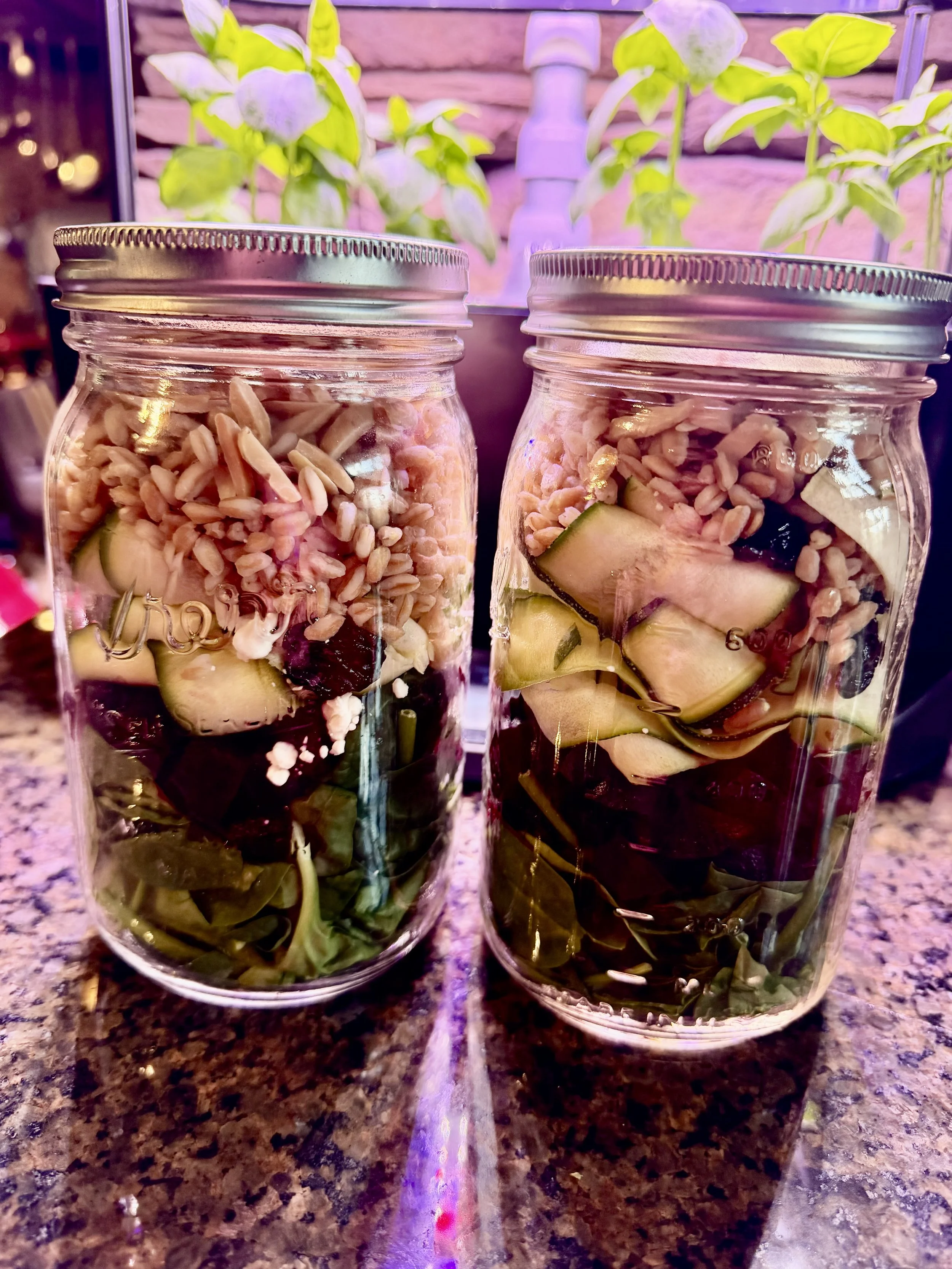
I really like this recipe. It has a nice balance of whole grains, vegetables, healthy fats, and protein. This is the kind of recipe I would classify as an everyday, nutrient-dense meal—one that is both satisfying and elegant enough for entertaining while aligning with a Mediterranean-style eating pattern. See below for culinary and nutrition notes that fit well with Amy’s Teaching Kitchen format.
Serves 2. Recommend doubling recipe.
QUANTITY AND INGREDIENTS
4 Tbsp slivered almonds, toasted
1 medium beet, scrubbed (not peeled), roasted, cooled, and diced (prepare at sink)
2 Tbsp EVOO
kosher salt and freshly cracked pepper
1 cup farrow, rinsed (for gluten-free or alternative, use quinoa, see instructions below)
kosher or sea salt to salt water (similar to pasta)
DRESSING
2 Tbsp lemon juice and zest (1 lemon typically yields 2 Tbsps)
2 tsp Dijon mustard
1 tsp honey
pinch of red pepper flakes
3 Tbsp EVOO
kosher salt and freshly ground pepper
1 Tbsp finely chopped tarragon
2 cups baby spinach
1/2 cup crumbled soft goat cheese
1 medium large zucchini, trimmed and cut lengthwise into ribbons with a vegetable peeler (1 1/2 cups)
2 Tbsp dried cherries (preferred) or cranberries
SPECIAL EQUIPMENT
2 small sheet pans with liners (to toast almonds and roast beets)
oven or smaller Breville oven
saucepan with lid (to cook farro)
strainer (to strain farro)
large vegetable peeler or mandolin
zester
Ninja blender (for dressing)
4 1-quart mason jars or serving platter
An alternative: kale, roasted squash, cranberries, promegranates, and roasted pumpkin seeds
PREPARE YOUR MIS EN PLACE
1. Read and reread the recipe.
2. Gather all your ingredients and necessary equipment.
3. Consider order of preparation. Toast the almonds as you will want them to cool. Then preheat the oven to 350 degrees. Start preparation of beets and then farro. These can be prepared a day ahead. Assembly is quick and easy.
PREPARATION
1. Toast slivered almonds in the oven until lightly browned. Cool on the countertop. Transfer to a small bowl. Preheat oven to 350 degrees to roast beets.
1. Scrub beet(s) with a heavy-duty Scotchbrite pad. Cut a piece of foil that is large enough to wrap the beets and provide adequate circulation of heat. Drizzle with the olive oil and sprinkle with kosher salt and freshly ground pepper. Wrap and seal the beets. Place on a baking sheet and roast for 1 hour. Duration may vary depending on the size the beet(s). Remove the roasted beets and let cool on the counter. When ready to dice, put a cutting board in the sink. Cut the top(s) off. No need to peel. Cut into 1/2 inch dice.
2. While beets are cooking, prepare farrow. You will cooking the farro similar to pasta. Fill a small pot with hot, filtered water. Add salt. Bring to a boil (with lid) and add farrow. Once it comes back to a boil, lower to a low/simmer (remove lid) and cook for 10-12 minutes (sample frequently) until al dente. Drain well. Fork the grains to keep them separate. Repeat this several times until cooled.
(Alternatively, make quinoa. For every 1 cup of quinoa, use 1 1/2 cup filtered water. Rinse: Place the quinoa in a medium saucepan and cover with cool water. Use your fingers to agitate the seeds, then drain through a fine-mesh sieve. Repeat twice, shake dry, then transfer the quinoa back to the saucepan. (If your quinoa comes pre-rinsed, you can skip this process).
Dry and optional toast: Place the saucepan of quinoa on the stovetop over medium-high heat. Stir constantly until the quinoa is dry, 1 to 2 minutes. For a deeper flavor, continue to stir until the quinoa is fragrant and makes a continuous popping sound, 3 to 5 minutes. Reduce heat if the quinoa is burning.
Cook: Add 1½ cups hot water with a large pinch of salt, stir to combine, then cover and reduce heat to low. Cook until the quinoa is tender about 15 minutes. Turn off the heat and let rest, covered, for 10 minutes. Empty cooked quinoa onto a parchment lined sheet pan to absorb excess moisture. Fluff with a fork until cool.)
3. In the Ninja pitcher, blend lemon juice, lemon zest to taste, mustard, honey, large pinch of red pepper flakes, and salt. Slowly add the oil until it is well emulsified. Add additional lemon juice to taste. Blend again. Add additional salt and freshly ground pepper to taste.
4. Gently mix spinach with tarragon. Plate spinach/tarragon mix. Top with chopped beets, cut zucchini, crumbled soft goat cheese, dried cherries and toasted almonds. Place three small equal portions of the farrow around the sides of the salad. Drizzle dressing on top of everything when ready to serve.
CULINARY TIPS
1. Excellent make-ahead meal. Components can be prepared 1–3 days ahead and assembled in under 10 minutes. For example, toast almonds, roast beets, and cook farro. These can be done while you’re drinking your morning coffee. Consider doubling the dressing to repurpose for another salad.
2. Cook farro just until al dente. Slightly chewy farro provides the best texture and holds up well if making the salad ahead. Cool the farro completely. Spread it on a sheet pan or toss occasionally with a fork so the grains remain separate.
3. Use a vegetable peeler or mandolin for zucchini ribbons. Stop when you reach the seedy center for the prettiest ribbons and best texture.
4. Dress just before serving. Tossing with the vinaigrette at the last minute keeps the spinach crisp and vibrant.
5. Taste before serving. Goat cheese, almonds, and dried fruit vary in saltiness and sweetness.
7. Layer for mason jars. Place dressing on the bottom, followed by farro, beets, goat cheese, cherries, zucchini, almonds, and spinach on top to keep everything fresh until ready to eat.
8. Season each component. Lightly seasoning the farro and beets separately creates a much more flavorful finished salad.
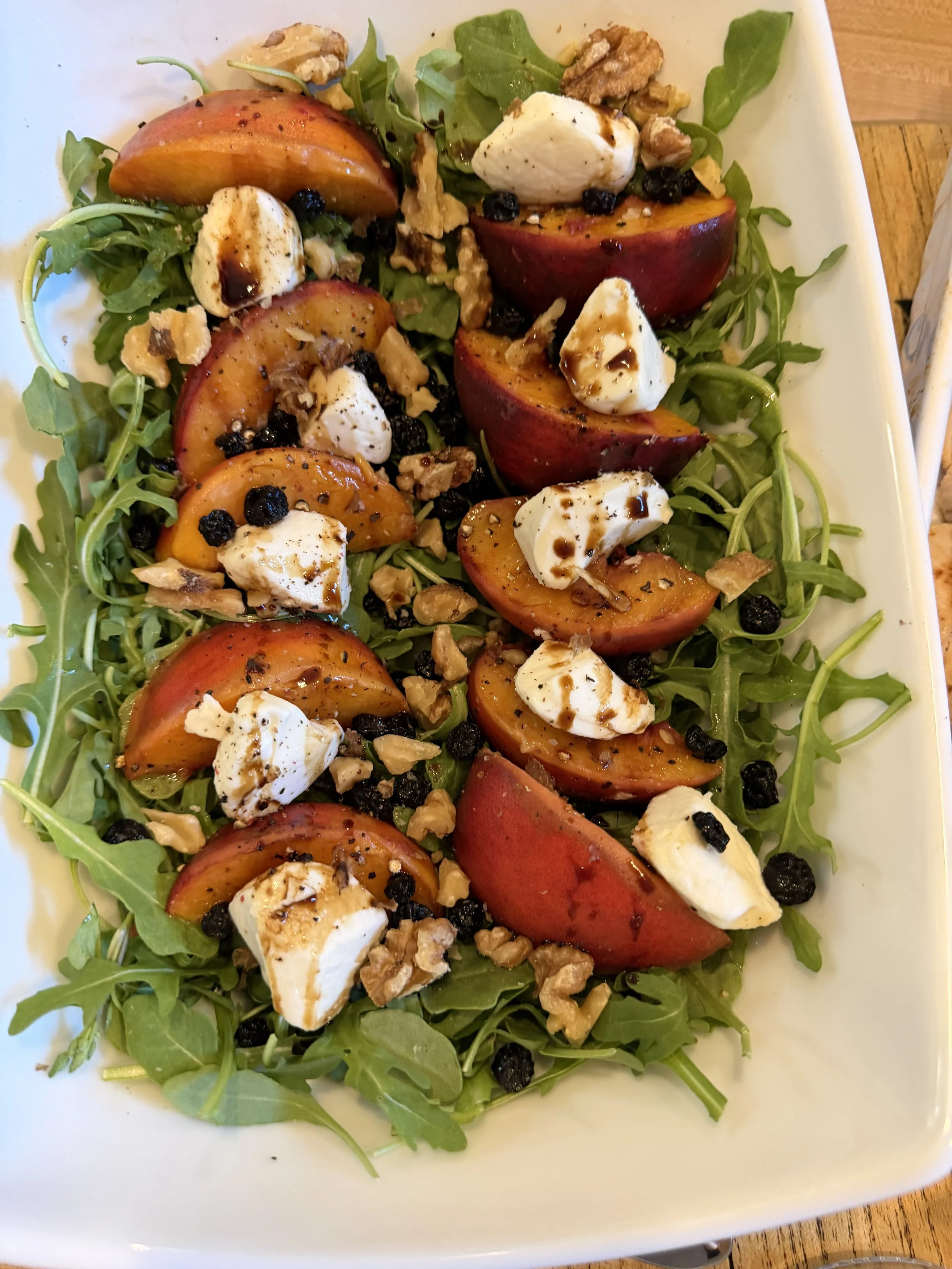
9. Customize seasonally. Substitute roasted delicata squash, pears, or apples in autumn, or fresh peaches in late summer.
NUTRITION NOTES
1. Rich in fiber. Farro, beets, and greens, provide fiber that supports digestive health, satiety, and healthy blood sugar regulation.
2. Excellent source of plant nutrients. Beets supply betalains and nitrates, spinach provides lutein, folate, and vitamin K, while zucchini contributes vitamin C and hydration.
3. Heart-healthy fats. Extra-virgin olive oil and almonds provide predominantly monounsaturated fats that support cardiovascular health.
4. Balanced meal. Whole grains, healthy fats, vegetables, and goat cheese create a satisfying combination of complex carbohydrates, protein, and fat.
5, Naturally anti-inflammatory. Colorful vegetables, olive oil, herbs, and nuts contribute a variety of phytonutrients associated with reduced inflammation.
6. Good vegetarian protein. Goat cheese, almonds, and farro provide moderate protein. For a higher-protein entrée, add grilled salmon, roasted chickpeas, white beans, or grilled chicken.
7. Supports healthy blood sugar. The combination of fiber, fat, and protein helps moderate the glycemic response compared with grain-based salads made without vegetables or healthy fats.
8. Naturally Mediterranean-inspired. This salad reflects many principles of the Mediterranean eating pattern, emphasizing whole grains, vegetables, olive oil, herbs, and nuts.
9. Nutrient absorption. Olive oil enhances absorption of fat-soluble nutrients such as vitamins A and K and carotenoids from the vegetables.