Italian Scratch-Cooked White Bean and Tuna Salad
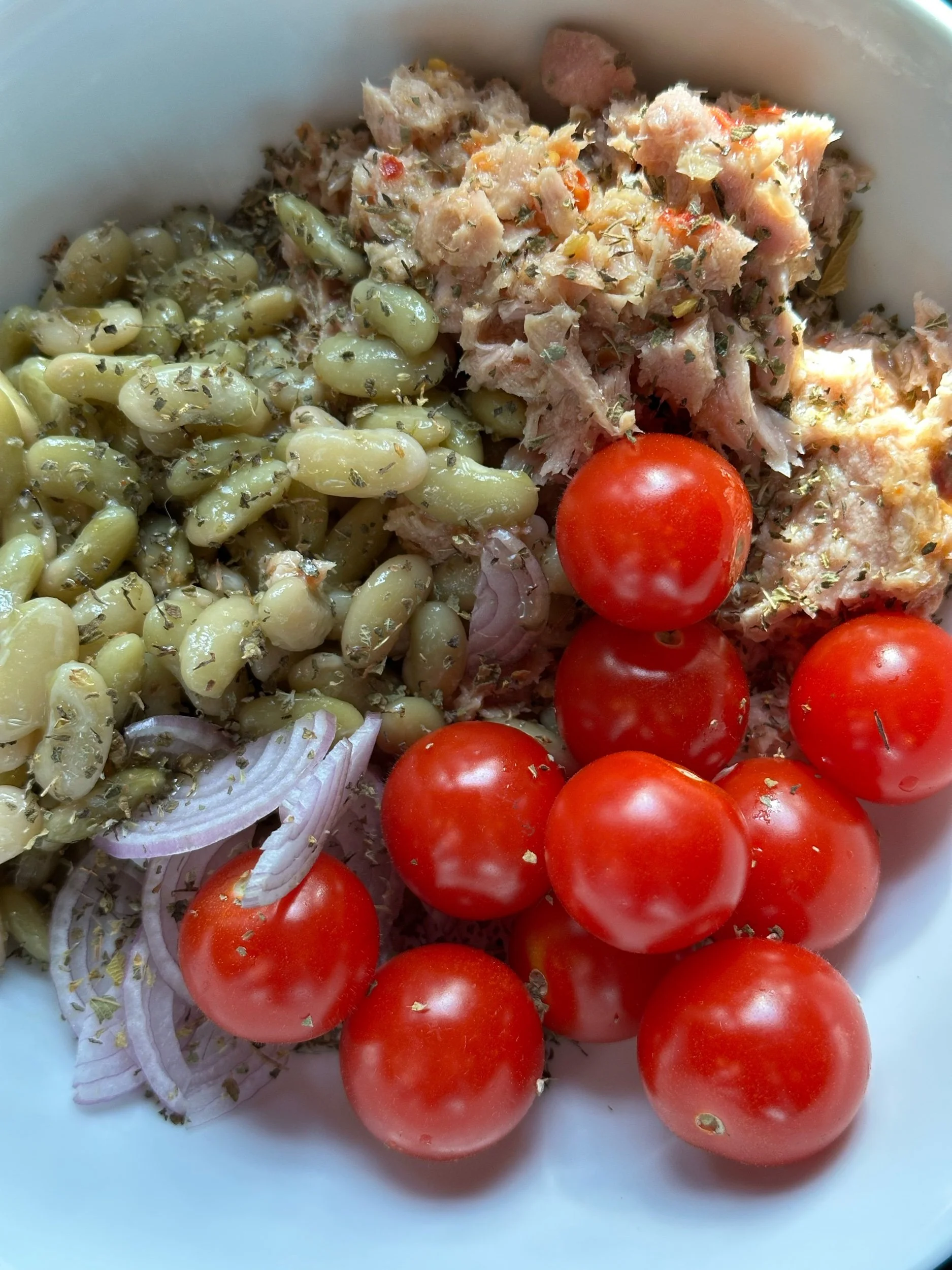
This Italian white bean and tuna salad is designed as a skills-based dish rather than a rigid recipe. Its primary purpose in the Teaching Kitchen is to demonstrate how easy and economical it is to cook beans from scratch, how batch-cooked beans become the backbone of multiple meals, and how a nourishing dish can be built almost entirely from pantry staples and refrigerator odds and ends.
By starting with dried beans, participants in the Teaching Kitchen learn that homemade beans are more flavorful, better textured, and far less expensive than canned. From there, the salad becomes a template: use whatever vegetables are on hand, add a high-quality canned tuna for protein, and finish with a simple vinaigrette that brings everything together. This is real-life cooking—flexible, practical, and deeply satisfying.
Tweaked from Heirloom Bean Guide Rancho Gordo
QUANTITY AND INGREDIENTS
VINAIGRETTE (EMULSION)
2 tablespoons freshly squeezed Meyer lemon juice or fruity, light white vinegar (white balsamic)
2 garlic cloves, roughly chopped
6 tablespoons extra-virgin olive oil
½ tsp Dijon mustard
salt and freshly ground pepper
COOKING BEANS FROM SCRATCH
2 cups white beans (cooked from scratch, alternatively used canned, drained and rinsed), at room temperature
1/2 lb dried beans, presoaked
1–2 Tbsp olive oil
Aromatics:
¼ medium-size onion with stem intact
1 bay leaf
1 garlic clove, crushed
small carrot
sprig of fresh thyme
½ tsp sea salt
PREP OTHER INGREDIENTS PRIOR TO ASSEMBLY
1 6½-ounce good quality tuna, drained and flaked (preferred Italian packed in extra-virgin olive oil)
½ red onion or shallot, finely chopped
1 red bell pepper, seeded and julienned (alternatively cucumber, vine-ripened cherry tomatoes, hearty greens, or combination)
1 teaspoon dried dill, dried oregano, or fresh herb such as basil, chiffonade
SPECIAL EQUIPMENT
Blender (Ninja preferred)
Medium size pot (for bringing dry beans to boil and soaking, later for cooking them)
PREPARE YOUR MIS EN PLACE
1. Read and reread the recipe.
2. Gather all your ingredients and necessary equipment.
3. For the purpose of the Teaching Kitchen, the beans will be presoaked. To begin, start with cooking the beans. This will take between 30-45 minutes.
PREPARE YOUR DISH
1. To shorter the cooking time for beans, they have a Quick Soak. Cover the beans with filtered water, bring to a boil for 2 minutes. Turn off heat, cover, and let sit for an hour. Drain and rinse. THIS WILL BE DONE IN ADVANCE OF CLASS.
2. Cook the beans: Add soaked beans to a pot and cover with 2 inches of filtered water. Add 1–2 Tbsp olive oil (reduces foaming) and aromatics (¼ onion with stem intact, a bay leaf, garlic clove, small carrot, and sprig of fresh thyme).
Bring just to a simmer, then cook low and slow. For soaked beans this is approximately 30–60 minutes, depending on the bean type and age of the bean. Check occasionally and add hot water if the beans aren’t submerged. Try not to stir much (tip the pot and swirl instead). When beans are just turning tender, add salt. Continue simmering until tender (but not mushy). Drain. DO NOT RINSE. Remove aromatics. Remove to a bowl to cool.
3. While beans are cooking, put all the ingredients for the vinaigrette directly into the blender cup and blend until emulsified. Season with salt and freshly ground pepper.
4. Toss the beans in the vinaigrette to coat. Avoid excess liquid.
5. Plate the beans, tuna, onions, fresh vegetables and/or greens. Drizzle with leftover vinaigrette. Adjust with more lemon juice or oil as needed. Garnish with dried or fresh herbs.
CULINARY TIPS
1. Cooking Beans from Scratch : Presoaking matters: Soaking dried white beans overnight improves texture, shortens cooking time, and enhances digestibility. Aromatics (onion, bay leaf, garlic, carrot, and thyme) and olive oil infuses flavor from the inside out. Salt during cooking: Adding salt while beans cook (rather than only after) seasons them evenly and helps preserve their shape.
2. Cook once, eat all week (batch-cooking): A ½-pound of dried beans yields a generous amount. Leftovers can be used in soups, grain bowls, pasta, toast, or blended into spreads.
3. Vinaigrettes: Using a blender creates a fully emulsified vinaigrette with garlic evenly distributed. In this recipe, Meyer juice adds brightness and softness; white balsamic provides gentle sweetness. Make extra; this vinaigrette keeps well in the refrigerator and can be used on vegetables, grains, or other salads.
4. Building the Salad. Room-temperature beans absorb the vinaigrette better when not cold.
5. Vegetable flexibility: Red bell pepper adds crunch and sweetness, but cucumber, cherry tomatoes, or hearty greens work just as well.
6. Herbs as personality: Dried dill or oregano keep this pantry-friendly; fresh basil adds a brighter, more summery note.
NUTRITION TIPS
1. Plant protein (beans) and seafood protein (tuna) both provide substantial protein to supports muscle health and satiety.
2. Narrowing the fiber gap! Beans may be the closest thing nutrition science has to a pharmacologic food. One of the reasons beans are such powerful foods medically is their fiber. Beans are rich in both soluble and insoluble fiber, supporting gut health, blood sugar stability, and cholesterol reduction. A single cup of beans contains about 12–15 grams of fiber, which is nearly half of a person’s daily requirement. That fiber performs several important physiologic functions.
First, it feeds the gut microbiome. Gut bacteria ferment bean fiber into short-chain fatty acids like butyrate, which help maintain colon health and reduce inflammation.
Second, bean fiber slows carbohydrate absorption, which helps blunt post-meal glucose spikes and improves insulin sensitivity.
Third, soluble fiber binds bile acids in the gut, which helps lower LDL cholesterol.
So in one simple food, you get microbiome support, improved glycemic control, and cholesterol reduction—which is why legumes are consistently associated with lower cardiovascular and metabolic disease risk.
In nutrition research, legumes are one of the few foods that consistently show benefit across multiple outcomes—cardiovascular disease, diabetes risk, and overall mortality.
3. Extra-virgin olive oil and olive oil-packed tuna supply monounsaturated fats that support heart and brain health. Tuna is a good source of polyunsaturated fats (omega-3- fatty acids). Be cautious of excessive intake of tuna due to mercury content. Bluefin > Albacore > Yellowfin > Skipjack (lowest). Italian or Spanish tuna packed in olive oil often is a higher quality with better texture and flavor (most commonly skipjack).
4. Vinaigrettes are a classic example is an emulsion, when two liquids that normally do not mix (like oil and water) are dispersed together into tiny droplets. Shaking or whisking helps merge these ingredients. Common emulsifiers include mustard, garlic paste, egg yolk, but also honey and seed and nut butters. The same basic chemistry happens in our bodies. Dietary fats cannot travel in blood on their own because blood is water based. The body packages fats into tiny particles-HDL, LDL, chylomicrons- which acts as biologically emulsions that allow fat to move through the bloodstream.
5. Micronutrient density: White beans provide iron, magnesium, potassium, and folate; tuna contributes B12, selenium, and omega-3 fatty acids.
6. Mediterranean pattern: This dish naturally aligns with Mediterranean and MIND-style eating patterns—simple ingredients, minimal processing, and nutrient density without restriction.